Raspberry Pi 5 Review: The Most Powerful SBC for Projects in 2026
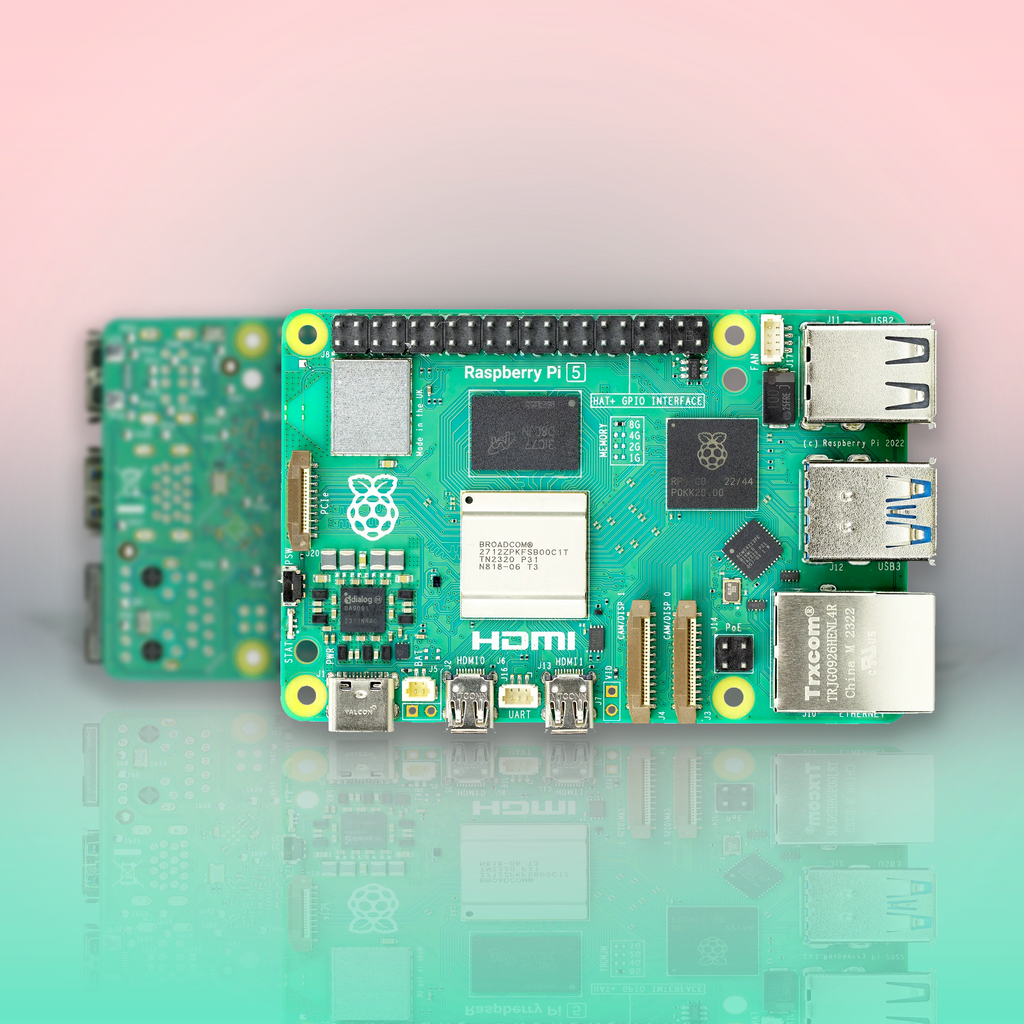
The Raspberry Pi 5 triples the performance of the Pi 4 with its Cortex-A76 processor and adds PCIe 2.0. Is it worth buying in 2026?
Overall rating
Pros
- 3× faster than Pi 4 in CPU tasks
- PCIe 2.0 — NVMe SSD support via HAT
- 8 GB RAM in top config
- Massive ecosystem: thousands of tutorials and libraries
- Dual MIPI camera support
Cons
- Higher power draw than Pi 4 (needs 5V/5A supply)
- Needs active cooling under sustained load
- Price increased: from $60 USD for 4GB model
Interesting fact: The Pi 5 is the first Raspberry Pi to use custom silicon designed in-house — the RP1 southbridge chip handles USB, Ethernet, camera and display I/O separately from the main Broadcom SoC. Previous models relied entirely on Broadcom for I/O, which limited flexibility. This is also why the Pi 5 can finally push proper PCIe bandwidth. Since the original 2012 model, the Raspberry Pi Foundation has sold over 60 million units across the entire product line.
What makes it special?
The Raspberry Pi 5 is the first model to include PCIe 2.0 directly on the board, enabling NVMe SSD connection via an official HAT with dramatically faster storage than microSD.
| Spec | Raspberry Pi 4 | Raspberry Pi 5 |
|---|---|---|
| CPU | Cortex-A72 1.8GHz | Cortex-A76 2.4GHz |
| GPU | VideoCore VI | VideoCore VII |
| Max RAM | 8 GB | 8 GB |
| PCIe | None | PCIe 2.0 (1 lane) |
| USB 3.0 | 2 ports | 2 ports (faster) |
| Base price (4GB) | ~$55 USD | ~$60 USD |
Real-world performance
On desktop tasks (Raspberry Pi OS), the difference from Pi 4 is clear: web pages load faster, compiling code is significantly quicker, and 4K video playback is smoother.
For local AI projects: The Pi 5 runs small AI models (Whisper tiny, LLaMA 1B) with acceptable response times. It's not a GPU, but for prototyping it works.
Best use cases
- Home server: Local DNS (Pi-hole), NAS, media server
- Emulation: Handles consoles up to PS2/GameCube with good performance
- Advanced IoT: Computer vision, robotics, home automation
- Learning: The best platform for learning Linux and embedded programming