RTX 5060 vs RX 9060 XT: Which GPU to Buy in 2026?
NVIDIA's RTX 5060 brings DLSS 4 Multi Frame Generation while AMD's RX 9060 XT offers more VRAM at a lower price. Here's the full breakdown for 1080p and 1440p gaming.
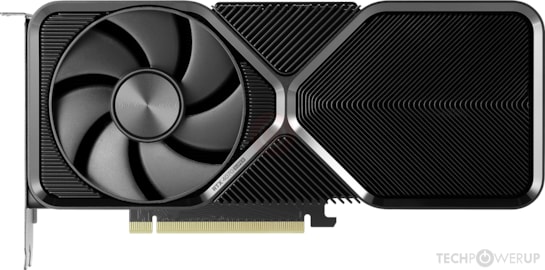
The mid-range GPU battle in 2026 comes down to two cards: NVIDIA's RTX 5060 (Blackwell) and AMD's RX 9060 XT (RDNA 4). Both target the $300 sweet spot, but they take very different approaches.
| Spec | RTX 5060NVIDIA | RX 9060 XT 16GBAMD |
|---|---|---|
| Architecture | Blackwell (GB206) | RDNA 4 (Navi 44) |
| VRAM | 8GB GDDR7 | 8GB / 16GB GDDR6 |
| MSRP | ~$329 | ~$299 / $349 |
| 1080p gaming | Excellent | Excellent |
| 1440p gaming | Very good | Very good |
| Ray tracing | Better | Good |
| AI upscaling | DLSS 4 MFG | FSR 4 |
| Power draw | ~150W | ~160W |
| Raster performance | Fast | Slightly faster |
| Driver stability | Excellent | Good |
1080p gaming — both are overkill in the right way
At 1080p, both cards push well past 120fps in any modern title. The real story here is future-proofing: the RX 9060 XT 16GB version gives you double the VRAM for titles that are increasingly demanding memory (especially at higher texture settings).
At 1080p max settings, the performance difference between these two cards is under 5% in most games. The choice really comes down to features and ecosystem.
1440p gaming — the better target resolution
Both cards handle 1440p well. Raster-only performance slightly favors AMD, but NVIDIA closes the gap with DLSS 4 Multi Frame Generation enabled — and often surpasses AMD's FSR 4 in titles that support it natively.
Tested averages at 1440p Ultra (without upscaling):
- RTX 5060: ~85–95 fps average across popular titles
- RX 9060 XT: ~88–100 fps average across popular titles
DLSS 4 MFG vs FSR 4 — the key differentiator
This is where the RTX 5060 pulls ahead. DLSS 4 Multi Frame Generation can generate 3 extra frames for every 1 rendered, dramatically boosting perceived frame rate in supported titles. FSR 4 is excellent and open-source (works on any GPU), but the AI quality of DLSS 4 is noticeably better in motion clarity and ghosting.
Key question: Do the games you play support DLSS 4 MFG? Check the DLSS game list. If your favorites are there, the RTX 5060's advantage is significant. If not, AMD offers better raster value.
VRAM matters more than ever in 2026
Modern games increasingly push past 8GB VRAM at 1440p with max texture settings. The RX 9060 XT 16GB version ($349) gives you a strong future-proof argument — more than the RTX 5060 8GB at $329.
Which should you buy?
Choose the RTX 5060 if:
- You play games with strong DLSS 4 support
- You care about ray tracing quality
- You're in the NVIDIA ecosystem (existing NVENC encoder use, CUDA tools)
Choose the RX 9060 XT 16GB if:
- You want maximum VRAM for future-proofing
- You play games where AMD raster leads
- You want open upscaling (FSR works on all GPUs including older ones)
Frequently asked questions
Is 8GB of VRAM already outdated in 2026? Not outdated, but increasingly tight — most games run fine at 1080p/1440p with 8GB at high (not ultra) texture settings, but a handful of recent AAA titles with max textures at 1440p will drop frames or stutter on 8GB cards where a 16GB card stays smooth. If you plan to keep the card 3+ years, the 16GB version is the safer bet.
Do I need a specific power supply wattage for either card? Both are efficient enough that a quality 550–650W PSU comfortably handles either card in a typical single-GPU build — neither requires the beefier 750W+ supplies that high-end cards need.
Can I use DLSS on an AMD card or FSR on an NVIDIA card? FSR 4 is open and works on both AMD and NVIDIA GPUs (and even older cards, with reduced quality on non-RDNA4/non-RTX hardware), which is exactly its appeal. DLSS, by contrast, is locked to NVIDIA RTX GPUs only — that exclusivity is the tradeoff for its typically sharper image quality.